Wednesday, 29 February 2012

Hubert Parry - I Was Glad

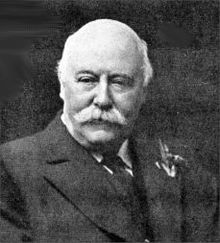
Hubert Parry
1848 - 1914
With his full title as: Sir Charles Hubert Hastings Parry, he was and still is one of the most loved English composers of all time. In fact, it is his piece, 'I Was Glad' that he is best-known for. Similar to many other composers, Parry worked as a historian and teacher of music, and worked as the director of the Royal College of Music from 1895 until his death, as well as being the professor of music at Oxford for eight years. Without these outstanding academic roles, imagine what other great works he could have composed in his extra time! Influenced as a composer by Bach and Brahms, Parry created a powerfully diatonic style which eventually influenced future English composers such as Elgar and Vaughan Williams.

I absolutely love this work because it's the only piece of music that actually makes me feel genuinely patriotic! The opening thirds on the organ and the grandeur of the pedal accompaniment (actually played by trumpets in some cases) sets the stage for the full power of the choir. Here is another example of words and music together at their best. An expression of the nation's love for this piece is the fact it was sung while the Duchess of Cambridge walked through Westminster Abbey at her wedding.

I was glad when they said unto me
We will go into the house of the lord
Our feet shall stand in thy gates, O Jerusalem
Jerusalem is builded as a city
That is at unity in itself.
O pray for the peace of Jerusalem,
They shall prosper that love thee
Peace be within thy walls,
And plenteousness within thy palaces.

Left: The Duchess of Cambridge walks through Westminster Abbey to Parry's 'I Was Glad'


Westminster Abbey choristers
Coincidentally, my choir sang the same piece in Westminster Abbey a few weeks before the wedding to celebrate the trust in which our school is a part of. We were also singing with the Westminster choir and, despite the fact the boys singing my part were barely 12 years old, they had incredibly powerful and musical voices that rung through the entire building. 

Parry's diatonic style is particularly prominent here. His music has so many elements of grandeur that I always feel as if I should be on my feet to listen to it. Not only did Kate Middleton get to be married in one of the most iconic buildings in Britain, but she appropriately walked to the sound of one of the greatest English composers who ever lived. This piece is outstanding in every way, and even if some disagree, it makes a change from bloody Pachelbel's Canon!

Sunday, 26 February 2012

Lauridsen - 'O Magnum Mysterium'

Morten Lauridsen
Born 1943
As an American composer, Lauridsen worked as a professor of composition at the University of Southern California, and his music is well-known and often performed in concerts around the world. As well as 'O Magnum Mysterium', other popular works include, 'Contre-Qui' and 'O Nata Lux'. Perhaps best known for his chant-like and floating harmonies, Lauridsen was influenced by some of the great composers in history such as Monteverdi, Palestrina and even Debussy (particularly his experimental use of open fifths and chant form). One of his most famous choral works, 'Sure On This Shining Night' (which my school choir regularly sings in our carol service...) was even created out of influence from American musical theatre. Conductor Nick Strimple describes Lauridsen as, 'the only American composer in history who can be called a mystic, and whose probing and serene work contains an elusive and indefinable ingredient which leaves the impression that all the questions have been answered...' - and I couldn't have described his music better myself!

I first discovered Morten Lauridsen on a course during the summer called, 'The Eton Choral Course'. The course was designed by conductor and director of music at Eton college: Ralph Alwood, and provides vocal training and choral singing experience to enthusiastic young musicians. It was my first time on the course, and I was curious as to what we were going to be singing. To my surprise it was a great line-up, including Morten Lauridsen's 'O Magnum Mysterium' (as well as Herbert Howells' 'I Love All Beauteous Things' which I posted about earlier this month).

Eton Choral Course 2011 in Cheltenham, performing 'O Magnum Mysterium'
(I'm somewhere on the left...)
By the time we had sight-read through the first couple of pages, I knew I was going to love this piece. Not only is it one of few choral works that actually has a decent tune for the poor altos, but the harmonies that he uses are effortlessly beautiful, and join the different sections of the piece together without interruption. As well as this, there are particular moments (clashes of vocal parts) that really give a unique personality to Lauridsen's quite widely used style of choral composition. For instance at 3.35, where we can hear a semi-tone clash between soprano and alto parts. These are the moments where it only works if you have the the volume up, your feet up and your eyes closed. Enjoy!

Friday, 24 February 2012

Shostakovich - Piano Concerto No.2

Dmitri Shostakovich
1906 - 1975
Dmitri Shostakovich is one of the most celebrated composers of the 20th century. He was heavily influenced by Prokofiev and Stravinsky, and developed a style of music that to me, is some of the most touching and colourful music in my classical music collection. Perhaps best-known for his orchestral music, (including fifteen symphonies and six concerti) he was also a great writer for the piano (being a great pianist himself) and also composed a substantial amount of music for film (this is evident particularly in this movement, as it's easy for one to imagine it accompanying a romantic classic).

Shostakovich's music is particularly interesting because it includes elements from all sorts of genres of Classical music from the 20th century. Mostly, his music is broadly tonal and romantic, however, it is his use of atonality and chromaticism that makes it clear that he was influenced by some of the more experimental composers of his time. (In some of his later works, he even made use of tone rows). However, it was not just the composers of his time that influenced him, he said that one of his main influences was Bach, and we can hear this in his fugues. Other influences include Beethoven, Mahler and even Berg. Out of all of his idols, Stravinsky was the composer that he admired the most, describing him as 'the composer I worship'.

The master himself at the piano...
This piece is a particular favourite of mine because it was the first piece of Shostakovich that I learnt on the piano. The work is scored for solo piano, wind, horns, percussion and strings. Despite the jolly tone of the first movement (allegro) started by the bassoon, the second movement is much more romantic - almost similar to that of a Chopin Nocturne. The mood is created by the different colours that Shostakovich uses throughout, not only in orchestration, but in tonality and key. The andante starts with strings in C minor, and when the piano enters at 1.10, the key modulates beautifully to C major. Like most of the writing in this movement, the piano entry in which we hear a simple triplet theme is so elegant that it seems to float so effortlessly above the rest of the orchestra.

Unfortunately when I performed the piece, I didn't have the luxury of a professional orchestra at my disposal, however I did instead have a very willing music teacher to accompany me by playing the orchestral part on a second piano. Although this did still sound beautiful, what I really love about this piece is the contrast between the colours and sounds of the low tessituras of strings and wind with the delicate melodies of the piano. As well as this, the most incredible thing about this piece is the expressive tone that Shostakovich achieves, even with a relatively easy piano part consisting only of three or four quite simple themes. The phrase, 'less is more' definitely comes to mind.


Monday, 20 February 2012

In the USA (and so are Voces8!)

Miami Beach
Arrived in Miami last night, and what can I say? - it's a beautiful city. After buying some new headphones at the airport on the way, I can now enjoy the splendour of my classical music collection in all its glory on Miami beach. So, as I'm in the US, I thought it would be the perfect time to write a post about one of the best a capella groups in the world, Voces8. I thought it would be appropriate to post about them as they are currently touring around the states performing and teaching in concert halls and schools, and making daily videos about everything they get up to.

Voces8
The international award-winning octet has established itself at the front of British a capella. Consisting of six men: Rob, Barney, Chris, Charles, Paul and the infamous Dingle, and two girls: Emily and Andrea.

The reason Voces8 are so close to my heart, is because my schools is one of the lucky few that gets to work with them. For the last couple of years, they have come to our school to work with my Close Harmony group: Vocalicity! We have even been on weekends away with them, and after getting to know them quite well over the last couple of years, I've come to find them to be not only incredibly talented singers and all-round musicians, but really funny and lovely people who work so well with both teenagers and children. They've taught us some of their famous arrangements, worked on our vocal skills with us and most importantly, taught us that the most important thing in our group (more than tuning!) is that we are all working hard to achieve something together; similarly to achieving good intonation in the harmony of singing, creating social and emotional harmony is also key. Here is a picture of us performing in the same venue as Voces8 at a charity evening in Fortnum & Masons:
Emanuel Close Harmony Group - Vocalicity!
Here is one of my favourite of their pieces, (something my group has learnt) called 'Steal Away'. Composed originally as a negro-spiritual, this arrangement brings new levels of harmonic interest and detail, and is beautifully sung (as always!) by the group.


Why not take a look at their site: http://www.voces8.com/web/, where you can find out much more information about the group and upcoming concerts, CDs etc, and, for a bit of a laugh, their facebook page: http://www.facebook.com/VOCES8 where they have daily uploads of their adventures in the USA. Here is my favorite:


Tuesday, 14 February 2012

'Crucifixus' - Antonio Lotti (1667 - 1740)

An extract from the opening of Lotti's 'Crucifixus'
Antonio Lotti's 'Crucifixus' is a wonderful example of polyphony. Defined as music with a texture consisting of two or more indpendent melodic voices, Lotti's typical SSAATTBB arrangement is a perfect example of how to do it right. Despite the fact he produced a number of varied works in his lifetime such as masses, cantatas and even operas, (his operatic music being particularly dramatic and harmonically daring) it was Lotti's - often unaccompanied - choral works that made his name so famous.

His work is considered to be a bridge between the Baroque and Classical eras, and is thought to have influenced some of the greatest composers of his time such as Bach and Handel, who both had copies of Lotti's mass, 'Missa Sapientiae'. I myself am a great lover of polyphony; something which I feel is slightly neglected in most of today's contemporary choral writing. Other well-known composers of the genre include Tallis (1505 - 1585), Byrd (1540 - 1623) and Palestrina (1525 - 1594), all of whom came from the Renaissance period, where polyphony first began. Lotti is most famous for his 'Crucifixus' in 8 parts. Although it is not generally known that this motet actually comes from a larger work: 'Credo in F minor for choir and orchestra'.

Note the harmonic pattern of each of the vocal entries in the extract on the right. With every other entry, Lotti creates a semitone clash that sounds both mysterious and beautiful, which reflects the sad tone of the text about Christ's crucifiction. These clashes become even more satisfying when each of them resolve on the following beat. Despite the use of polyphony at the beginning and end of the piece, there are several moments and sections in which Lotti uses a homophonic texture to great effect, such as the second section with the text, 'crucifixus etiam pro nobis' meaning: he was crucified for us. For me, the obvious climax of the piece is at 2.10, where the voices reach their higher tessitura, and there is a natural crescendo towards the text, 'passus et sepultus est', which is loosely translated means, 'suffered and was buried.'


Monday, 13 February 2012

'Nightbook' - Ludovico Einaudi

Ludovico Einaudi
Born 1955
As a contemporary composer, it is obvious that Ludovico Einaudi is also an extremely talented pianist. As most of his compositions are for solo piano, his writing enables them to be easy on the ears, and easy on the hands. Although Einaudi himself has said that he would prefer not to be labelled as one particular genre, he is seen by most musicians as a minimalist. However, he distinguishes himself from this label with his sparse orchestral arrangements and memorable melodies. His music is mainly used in film scores such as ‘Insidious’, ‘Doctor Zhivago’ and television scores such as Top Gear. My favourite of his works is his album, ‘Nightbook’ (2009) and in particular, the titular track. This album actually saw Einaudi start to incorporate new synthesised sounds to his typical choice of piano and stringed accompaniment. Interestingly, in ‘Nightbook’ Einaudi uses the piano to emphasise the rhythm of the piece, which drives the rest of the music to the very end. Elements of the piece such as the off-beat accents in the repeated piano ostinato, repetition of the piano’s phrases by the strings and the constant ominous sound of quavers in the accompanying cello create an atmosphere of extreme tension. In the middle of the piece, Einaudi creates a resolution to the tension created in the introduction by switching the tonality to major, and stripping the accompaniment to a mere shaker and viola. However, we see the return of the introductory theme with added decoration from all of the instruments, climaxing to a satisfyingly grand, major finish. For me, Einaudi is the master of atmospheric contemporary music.


Saturday, 11 February 2012

'The Highgrove Suite' - Patrick Hawes

Patrick Hawes
Born 1958
Knowing little of him, the first work of Patrick Hawes that I listened to was his recent collection entitled 'The Highgrove Suite'. The piece was commissioned by Prince Charles to celebrate his home in Gloucestershire. This is obvious when you listen to it, as it paints a beautiful picture of English countryside through the use of glittering harp solos and thick string textures and harmonies. The 25 minute composition includes the movements 'Godess of the Woods', 'The Wildflower Meadow' (my favourite!), 'Sanctuary' and 'The Gladiator', all of which were inspired by the gardens at Highgrove, and were expanded from the first movement that was originally composed for Charles' 60th birthday. I instantly fell in love with the suite, simply because of the number of luxuriously romantic themes and motifs that Hawes incorporates throughout the suite.

The Highgrove Suite
Highgrove House in
Gloucestershire
The opening of 'The Wildflower Meadow' is instantly enchanting. From a harp solo accompanied by upper strings and pizzicato celli, it develops into a rich and glorious texture of Hawes' typically English use of harmony and orchestration, and, similar to the architecture of the setting; classical, well-shaped and generally very beautiful. Unfortunately, I was unable to find a decent recording on Youtube. However, I insist that it is an album worth buying. To listen to extracts of each of the four movements, click here.